Picking a good mango can feel like a gamble. The colour can lie. The squeeze test can mislead you. You buy what looks right, take it home, and find out it is either rock hard and tasteless or overripe and stringy.
Here is how to actually pick one, using four senses in a specific order. Our team does this at Brisbane Markets every morning during mango season, and you can do it at the fruit shelf the same way.
Smell first
This is the most reliable test. Bring the mango to your nose with the stem end close. A ripe mango smells sweet and fruity at the stem. It should smell like a mango, not like nothing.
If it smells sour or alcoholic, it is overripe. If it smells like nothing at all, it is underripe and may not ripen well off the tree.
Feel second
Gently squeeze the mango in your palm. Not between fingers, which can bruise it. A ripe mango has a slight give, like a ripe avocado.
Rock hard means underripe. Soft and squishy means overripe. You want firm with a bit of yield.
One note: different varieties have different firmness at peak. R2E2 stays firmer than Kensington Pride even when fully ripe. Calypso is usually a bit firmer than both. Knowing the variety helps.
Colour is tricky
Colour is the least reliable indicator because it varies by variety. Here is a quick guide:
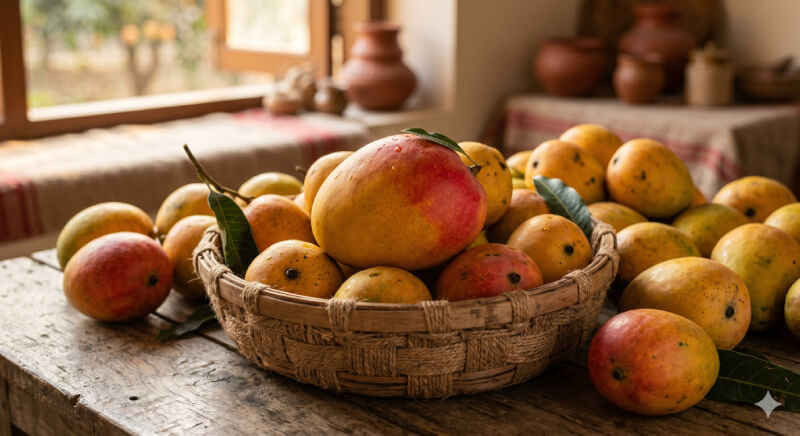
- Kensington Pride: Green-yellow base with a red blush. Fully green means not ripe. Heavy yellow-orange means well on the way.
- R2E2: Bright red-orange blush. Large fruit. Can stay green and still be ripe, so trust smell and feel over colour.
- Calypso: Bright red blush, orange-green base. One of the easiest to assess by colour.
- Honey Gold: Golden yellow when ripe. Colour works better here than most varieties.
Weight matters
Pick up two mangoes of similar size. The heavier one has more juice. Juice equals flavour. Always go heavier for size.
This is the easiest test to do quickly and is a good final check before you put one in the bag.
What to avoid
- Black spots, especially large soft black patches. Small black specks on the skin are often fine, but large blackened soft areas mean the flesh is damaged.
- Deep wrinkles in the skin. A slight softening of the skin texture is fine. Deep wrinkles mean the fruit is past it.
- Sour or fermented smell. Overripe. The flesh inside will be mushy and alcoholic.
Ripening at home
If your mango is a bit firm, place it in a paper bag with a ripe banana at room temperature. The ethylene from the banana speeds up ripening. Usually 2 to 3 days.
Never refrigerate an unripe mango. It will stop ripening and get mealy. Once ripe, the fridge gives you another few days.
Mango season in Australia
Australian mango season runs roughly November to March. The season starts up north in the Northern Territory and Far North Queensland, then moves south through Bowen, Bundaberg and eventually northern NSW. Different regions peak at different times.
We stock what is best each week during the season. Our team can tell you which variety is at its peak, which growing region it came from, and which one is sweetest today. Just ask at the shop.
Off-season (April to October), imported mangoes are around but the flavour difference is significant. If you want the best, stick to the Australian season.
One more tip
If you are buying mangoes for a specific day (a dinner party, a birthday), buy them a few days ahead and finish ripening at home. You have more control than picking something on the day that may or may not be ready.
Our team can also hand-pick for you if you tell us when you need them. Regular request, easy to accommodate. Just pop in or call (07) 3496 1714.
Find these ingredients at Fresh Country Markets Booval
Daily deliveries from Brisbane Markets Rocklea. A proper Indian grocery section alongside the fruit and veg. Pop in at Booval Fair Shopping Centre or give us a call.
Visit the Shop (07) 3496 1714